How Local Law 97 NYC Compliance Shapes Your Commercial Roof Choice
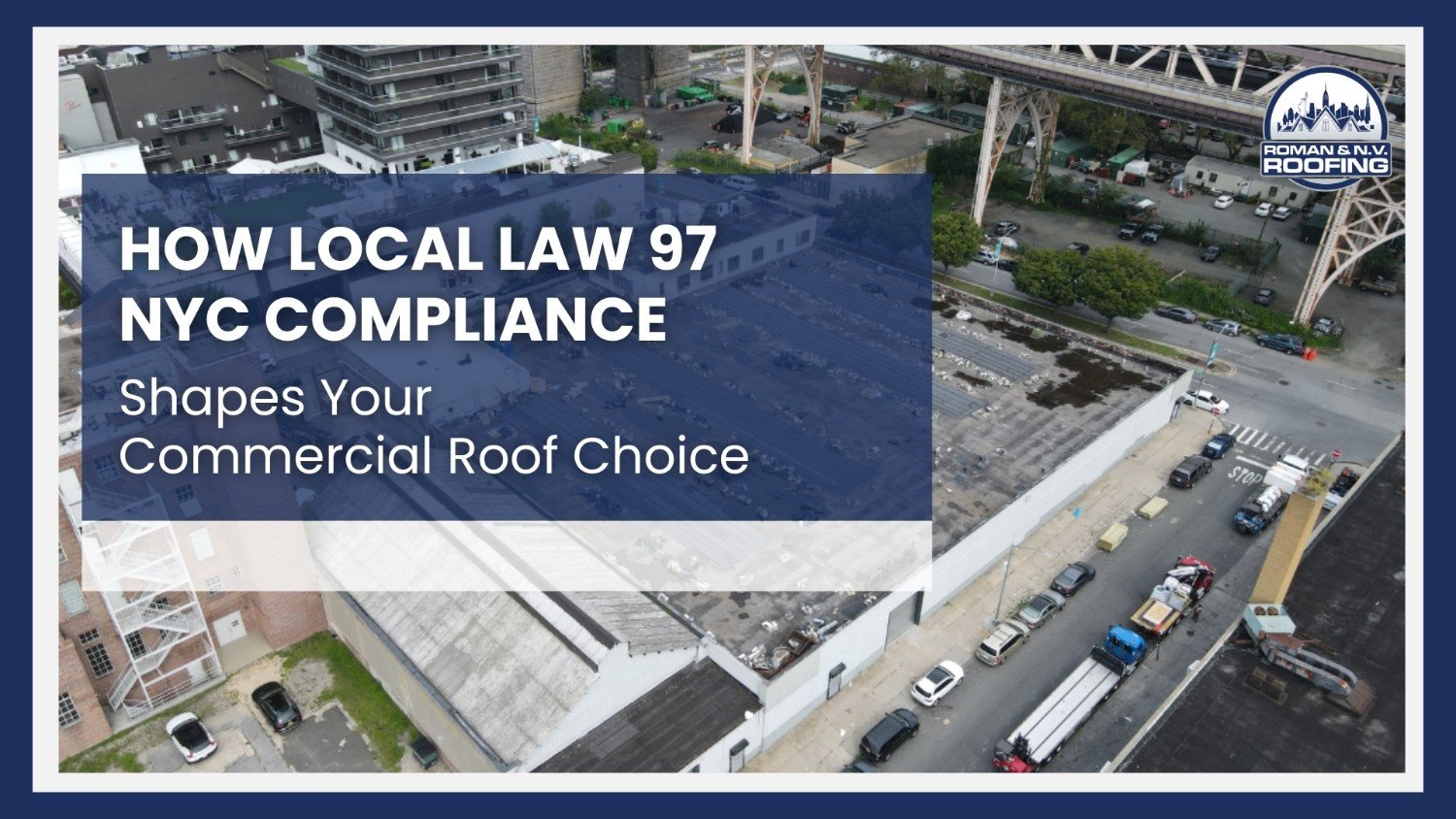
Local Law 97 is changing how NYC building owners think about their roofs. The law caps building emissions, and your roof has a direct effect on those numbers. So the roof you choose can either help you comply or push you over the line. Because penalties are steep, this choice now matters more than ever.
Here is the short version. A better roof lowers your energy use, which lowers your emissions. As a result, the right roof helps you stay under your cap. This is exactly where Local Law 97 NYC compliance services and smart roof planning meet.
This guide explains the law, how it affects your roof choice, and which roofing options support compliance.
What Is Local Law 97, and Who Must Comply?
Local Law 97 is part of NYC's Climate Mobilization Act, passed in 2019. It sets carbon emissions limits on large buildings, and those limits get stricter over time. The goal is to cut building emissions by 40% by 2030 and around 80% by 2050.
So who must comply? In general, the law covers most buildings over 25,000 square feet. That adds up to nearly 50,000 properties across the city. Because buildings produce most of NYC's emissions, the law targets them directly.
The limits work as a carbon cap per square foot. When a building goes over its cap, the penalty is 268 dollars for every metric ton of CO2 over the limit, each year. Therefore a building that runs well over its cap can face six-figure annual fines.
The first compliance period runs from 2024 through 2029. However, the 2030 limits are much tighter, and they will affect most covered buildings. So planning ahead matters, since upgrades take time.
Note that exact limits vary by building type and use. Therefore owners should confirm their specific cap with the city or a qualified professional.
How Local Law 97 NYC Compliance Services Help
Compliance can feel complex, so many owners get help. This is where Local Law 97 NYC compliance services come in. They turn a confusing law into a clear, step-by-step plan.
First, these services measure your building's current emissions. Because you cannot manage what you do not measure, this step sets the baseline. Then they compare that number to your cap.
Next, they model where your emissions come from. Heating, cooling, and the building envelope all play a part. As a result, they can point to the upgrades with the biggest impact.
After that, they recommend specific fixes. For the roof, that often means a target insulation level and a reflective membrane. So you get a clear spec, not a vague suggestion.
Finally, they handle the paperwork. Local Law 97 requires annual emissions reports, and the filing rules are strict. Therefore good support keeps you compliant and penalty-free.
In short, these services connect the law to real action on your roof and beyond.
How Local Law 97 Emissions Rules Affect Your Roof Choice
Your roof shapes how much energy your building uses. Because heating and cooling drive most building emissions, the roof plays a real role. So the right roof can lower your carbon output.
Think about a hot summer day. A dark roof soaks up heat, which forces the cooling system to work harder. As a result, the building burns more energy and emits more carbon. However, a reflective roof bounces that heat away. Therefore it cuts the cooling load and the emissions tied to it.
Insulation works the same way. A poorly insulated roof lets heat escape in winter and seep in during summer. So the heating and cooling systems run longer, which raises emissions. A well-insulated roof keeps that energy inside, which helps you stay under your cap.
In short, the roof is not just a cover. Instead, it is an emissions lever. This is why roof choice now sits at the center of compliance planning.
Roof Choices That Support Local Law 97 Compliance
Several roofing upgrades can lower your emissions. So when you plan a new roof, these options deserve a close look.
Add More Insulation
Better insulation is the simplest win. It reduces heating and cooling demand year-round. Therefore it directly lowers the energy use behind your emissions.
Choose a Reflective Cool Roof
A white, reflective membrane like TPO bounces sunlight away. Because it lowers rooftop heat, it cuts the cooling load in summer. As a result, a cool roof is one of the most effective compliance upgrades.
Make the Roof Solar-Ready
Rooftop solar offsets the electricity your building draws from the grid. So a solar array can lower the emissions tied to your power use. Even if you do not install panels now, a solar-ready roof keeps that door open.
Consider a Green Roof
A vegetative green roof adds insulation and absorbs heat. In addition, it manages stormwater and cools the building. However, green roofs need strong structural support, so they suit some buildings better than others. They also cost more upfront than a standard roof. Still, for the right building, the energy and stormwater benefits can justify the investment over time.
Local Law 97 Energy Efficiency Solutions Start at the Roof
Many owners focus on boilers and lighting first. Those matter, of course. However, the roof is often the most overlooked piece. Because it covers the entire building envelope, it has a wide impact.
Local Law 97 energy efficiency solutions work best as a package. So pairing a reflective, well-insulated roof with other upgrades multiplies the benefit. For example, a cool roof plus better insulation can cut cooling costs and emissions at the same time.
The roof also affects comfort and tenant satisfaction. Because a stable indoor temperature needs less mechanical effort, the whole building runs more efficiently. Therefore starting with the roof sets a strong foundation for the rest of your plan.
Why Local Law 97 NYC Compliance Services Stress Early Action
Timing matters with these upgrades. So the best time to improve your roof is when you replace it anyway. Adding insulation or switching to a cool membrane costs far less during a planned replacement.
Consider the math. If your roof is already near the end of its life, a replacement is coming regardless. However, doing it with compliance in mind turns a basic fix into an emissions win. As a result, you avoid paying twice for two separate projects.
Understanding Local Law 97 for property owners NYC also means understanding lead times. Permits, design, and equipment can take many months. Therefore starting early gives you room to plan before the 2030 limits arrive.
The Cost of Ignoring Local Law 97
Doing nothing is the most expensive option. Because the penalty is 268 dollars per metric ton over the cap, fines add up fast. For a large building running well over its limit, that can mean six figures every single year.
The 2030 deadline raises the stakes further. When the tighter limits take effect, most covered buildings will exceed their caps without upgrades. So owners who wait may face both rising fines and rushed, costly projects.
Smart roof planning avoids that trap. With the right Local Law 97 NYC compliance services and a roof built for efficiency, you protect both your building and your budget. Therefore acting early is almost always the cheaper path. Remember that fines repeat every year you stay over the cap. So a one-time roof upgrade can replace years of recurring penalties. As a result, the upgrade often pays for itself over time.
Frequently Asked Questions
How do NYC Local Law 97 emissions rules affect my roof choice?
Local Law 97 caps your building's carbon emissions, and your roof affects how much energy you use. Because heating and cooling drive most emissions, a reflective, well-insulated roof helps you stay under your cap. So a cool membrane, added insulation, or a solar-ready design can lower your carbon output. As a result, the right roof choice supports compliance and helps you avoid penalties.
Which buildings must comply with Local Law 97?
In general, the law covers most buildings over 25,000 square feet, which is nearly 50,000 properties in NYC. However, exact limits depend on building type and use. Therefore owners should confirm their specific cap with the city or a qualified professional.
What is the penalty for exceeding Local Law 97 limits?
The penalty is 268 dollars for every metric ton of CO2 over your cap, each year. So a building far over its limit can face six-figure annual fines. Because the limits tighten in 2030, the risk grows over time.
Can a new roof really help with Local Law 97 compliance?
Yes. A reflective, well-insulated roof lowers your energy use, which lowers your emissions. In addition, a solar-ready roof can offset electricity use. Therefore roof upgrades are a practical part of any compliance plan.
Final Thoughts
Local Law 97 has turned the roof into a compliance tool. Because it shapes your energy use, the roof you choose affects your emissions and your penalties. So the smart move is to plan your roof with the law in mind.
Reflective membranes, added insulation, and solar-ready designs all lower your carbon output. As a result, they help you stay under your cap as the limits tighten. In the end, a well-planned roof protects your building, your tenants, and your bottom line.
Plan a Compliant Roof
Wondering how your roof fits into your Local Law 97 plan? Roman and N.V. Roofing helps NYC commercial owners choose roofing systems that support compliance and cut energy costs. Reach out for an assessment, and build a roof plan that keeps you ahead of the 2030 limits.
Written by Billy Duka, Roman and N.V. Roofing. Learn more at https://www.romanll11nycrestoration.com/
