Why Your Building Keeps Failing the Facade Inspection in NYC
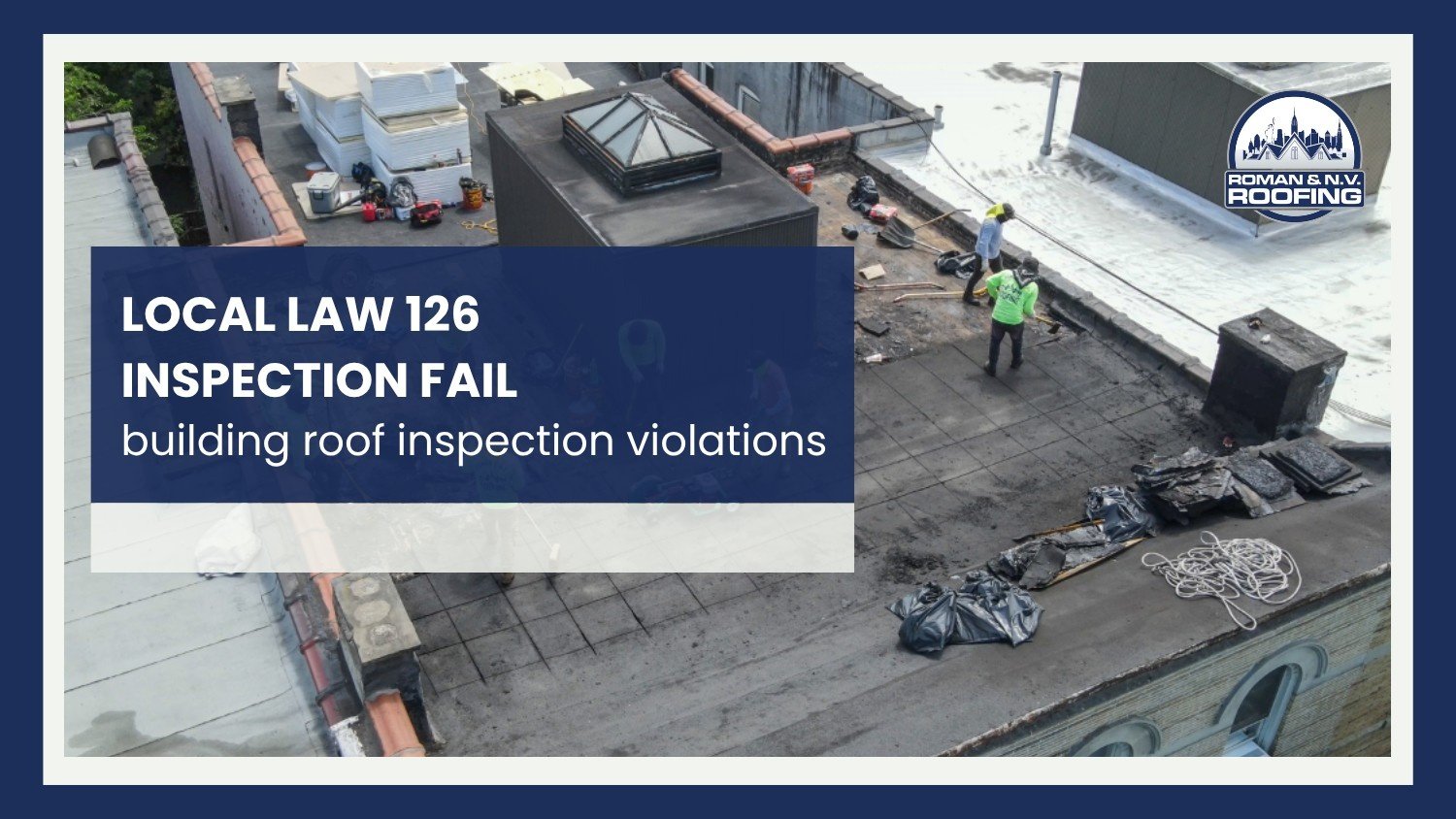
Failing a facade inspection in NYC once is a problem. Failing it repeatedly means something in the building's maintenance approach isn't addressing what inspectors are actually looking for. Most buildings that fail year after year aren't dealing with catastrophic structural issues. They're dealing with the same handful of conditions that weren't fully resolved after the previous inspection cycle.
This post covers why buildings fail Local Law 126 inspections repeatedly, what the most common violations involve, and what needs to happen differently to get to a passing report.
What the NYC Facade Inspection Process Actually Evaluates
Before getting into why buildings fail, it helps to understand what inspectors are looking at. Under New York City's Facade Inspection Safety Program, buildings over six stories are required to have their exterior walls and appurtenances inspected by a qualified exterior wall inspector on a regular cycle. Local Law 126 is the current governing legislation, which expanded and updated the original Local Law 11 requirements.
Inspectors evaluate the condition of:
Exterior masonry, brick, and stone cladding
Mortar joints between masonry units
Lintels, sills, cornices, and other projecting elements
Parapets and parapet caps
Balconies, railings, and cantilevered elements
Waterproofing and sealant conditions at joints and transitions
Any condition that could pose a falling hazard to pedestrians below
A building receives one of three designations: Safe, Safe with a Repair and Maintenance Program (SWARMP), or Unsafe. An Unsafe designation requires immediate action and physical safeguards like sidewalk sheds or netting. A SWARMP designation means repairs are required within a specified timeframe. Repeated SWARMP or Unsafe designations indicate that prior repairs either weren't completed or didn't address the root conditions.
The Most Common Reasons Buildings Fail Facade Inspections in NYC
Most building roof inspection violations and facade failures come down to a consistent set of conditions. These aren't unusual or obscure. They show up on aging Brooklyn and NYC building stock repeatedly because they're the natural failure points of masonry and exterior wall systems under urban environmental stress.
Deteriorated mortar joints
Mortar between brick courses absorbs moisture over decades and eventually erodes, cracks, or pulls away from the masonry units on either side. When mortar joint depth exceeds acceptable limits or when joints have voids, cracking, or active water infiltration, it's a citation. Repointing repairs that were done piecemeal in prior cycles often leave adjacent joints in failing condition, which shows up on the next inspection.
Spalling or loose masonry
Brick that has absorbed water repeatedly through freeze-thaw cycles eventually spalls, meaning the face of the brick delaminates and becomes loose. Loose masonry anywhere on an exterior wall is an immediate safety concern and an Unsafe designation. Buildings that replace individual spalled bricks without addressing the underlying moisture infiltration that caused the spalling will see it recur in adjacent units within a few years.
Failing Local Law 126 inspection from parapet conditions
Parapets are among the most common sources of Local Law 126 inspection fails on older NYC buildings. They're exposed on both faces to weather, they experience significant thermal movement, and they sit at the top of the building where water from the roof and sky converges. Cracked parapet masonry, displaced or missing coping caps, and flashing failures at the parapet base all contribute to both facade and roof deterioration simultaneously.
When parapet conditions caused a violation in a prior cycle and only the most visible damage was repaired, the same parapet typically fails again because the underlying moisture infiltration that caused the original cracking was never stopped.
Lintel corrosion
Steel lintels span above window and door openings in masonry buildings. When moisture reaches the lintel through failed mortar or cracked sills above it, the steel corrodes and expands. That expansion cracks the masonry above and around it. A building that has had lintel issues cited before and addressed them with surface repairs rather than lintel replacement will fail again as the corrosion continues.
Sealant failures at joints and transitions
Control joints, expansion joints, and transition points between different materials need flexible sealant to accommodate movement. Sealant has a service life of roughly 10 to 15 years under normal conditions. Buildings where joints were sealed once and never revisited are likely carrying sealant that has hardened, cracked, or separated from the substrate on both sides. Water entering through failed sealant joints is a driver of the mortar deterioration and masonry damage that produces inspection violations.
Why Facade Inspection Violations Keep Repeating
A building that fails a Local Law 126 inspection, makes repairs, and then fails the next cycle usually has one of three problems.
Repairs addressed symptoms, not causes. Replacing spalled brick without stopping the moisture that caused the spalling means adjacent brick will spall next. Repointing joints without sealing the coping cap above means water continues to work down through the wall. Each repair cycle cleans up visible damage while the underlying water intrusion path stays open.
Repairs were scoped too narrowly. Inspectors flag what they can observe. Repairs made to exactly and only what was flagged leave marginal conditions just outside the cited area in place. Those marginal conditions deteriorate through the next weather cycle and become the citations in the next report.
The roof and facade weren't treated as connected systems. Water that enters through a failing roof membrane or parapet cap doesn't stay on the roof. It works into the wall assembly and shows up as facade deterioration on the exterior face. Buildings that manage roof repairs and facade repairs through separate contractors on separate schedules often miss the connections between the two systems. A facade that keeps failing despite repeated masonry repairs may be failing because the roof above it is still allowing water in.
What a Proper Repair Scope Looks Like After a Failed Inspection
Getting off the cycle of repeated failing facade inspections in NYC requires treating the inspection report as a starting point, not a complete scope of work.
A thorough repair approach after a Local Law 126 inspection fail should include:
Full review of the inspection report to understand which designations are Unsafe versus SWARMP and what the inspector's specific observations were
Contractor walkthrough of the cited areas plus adjacent conditions to identify deterioration that's progressing toward failure but wasn't cited yet
Roof and parapet assessment to determine whether water infiltration from above is contributing to facade conditions
Prioritized repair scope that addresses root causes, not just cited surfaces, including full lintel replacement where corrosion is present, coping cap resealing or replacement, and full-depth repointing rather than surface skim pointing
Documentation of completed repairs with photos and a repair log that the qualifying exterior wall inspector can reference when preparing the next filing
Buildings that approach repairs this way typically see a clear path to Safe or SWARMP designations within one to two cycles rather than continuing to accumulate violations.
The Connection Between Roof Condition and Facade Inspection Results
This point is worth its own section because it's consistently underappreciated in property management roofing decisions.
Water enters buildings from the top. A failing roof membrane lets water into the roof assembly. That water moves laterally and downward through the building envelope. It saturates insulation, corrodes embedded metal, erodes mortar from the inside, and pushes outward through masonry faces. The result shows up on facade inspections as spalling brick, cracked mortar, and deteriorated sills on floors well below the roof line.
A building in Brooklyn or anywhere in NYC that keeps failing facade inspections despite repeated masonry repairs should have its roof and parapet system evaluated as part of the next repair cycle. In many cases, stopping the water at the roof level reduces or eliminates the facade deterioration that's been generating violations.
At romanll11nycrestoration.com, the work covers both exterior restoration and roofing, which allows the connection between roof condition and facade performance to be addressed as a single scope rather than two disconnected repair programs.
FAQ: Failing Facade and Roof Inspections in NYC
Why does my building keep failing the annual roof inspection? Buildings that fail repeatedly are usually dealing with conditions that weren't fully resolved in prior repair cycles. Common reasons include mortar and masonry repairs that addressed visible damage without stopping the underlying moisture infiltration, parapet and coping conditions that were partially repaired but not sealed at the source, and roof systems that continue to allow water into the wall assembly between inspection cycles. A repair scope that treats root causes rather than cited surfaces is what breaks the cycle.
What does a Local Law 126 inspection fail mean for my building? A Local Law 126 inspection fail results in either a SWARMP or Unsafe designation depending on the severity of conditions found. SWARMP requires repairs within a specified timeframe before the next filing cycle. Unsafe requires immediate physical safeguards such as a sidewalk shed or netting and prompt remediation. Both designations require documented proof of completed repairs before the building can receive a Safe filing.
What are the most common building roof inspection violations in NYC? The most common violations involve deteriorated mortar joints, spalling or loose masonry, failing parapet conditions including cracked coping caps and open flashing, corroded steel lintels, and failed sealant at expansion and control joints. These conditions are driven primarily by long-term water infiltration and freeze-thaw cycling, which means they recur when repairs address surface damage without stopping the moisture source.
How long do I have to fix violations after a failing facade inspection in NYC? Timeline depends on the designation. Unsafe conditions require immediate physical protection of the public right of way and prompt repair, typically within 30 days for the protective measures. SWARMP conditions must be repaired within the timeframe specified in the filing, usually before the next inspection cycle. Failure to complete repairs within the required timeframe can result in city enforcement action and additional penalties.
Can roof repairs reduce the number of facade inspection violations? Yes, in many cases significantly. Water that enters through a failing roof membrane or parapet cap works down through the building envelope and causes the masonry deterioration that generates facade violations. Buildings where roof conditions are addressed as part of the overall building envelope repair scope often see a meaningful reduction in facade violations in subsequent inspection cycles because the primary moisture source has been eliminated.
Getting Off the Cycle of Repeated Inspection Failures
A building that fails its facade inspection repeatedly isn't necessarily in worse structural shape than one that passes. It's usually a building where the repair approach has been too narrow, too reactive, or disconnected from the roof and envelope conditions driving the deterioration.
The path to a clean inspection report runs through a repair scope that addresses causes, not just citations, and treats the roof, parapet, and facade as parts of the same system.
If your building in Brooklyn or the five boroughs has been through multiple inspection cycles without getting to a clean filing, reach out to our team to walk through what the current conditions indicate and what a complete repair scope would involve.
